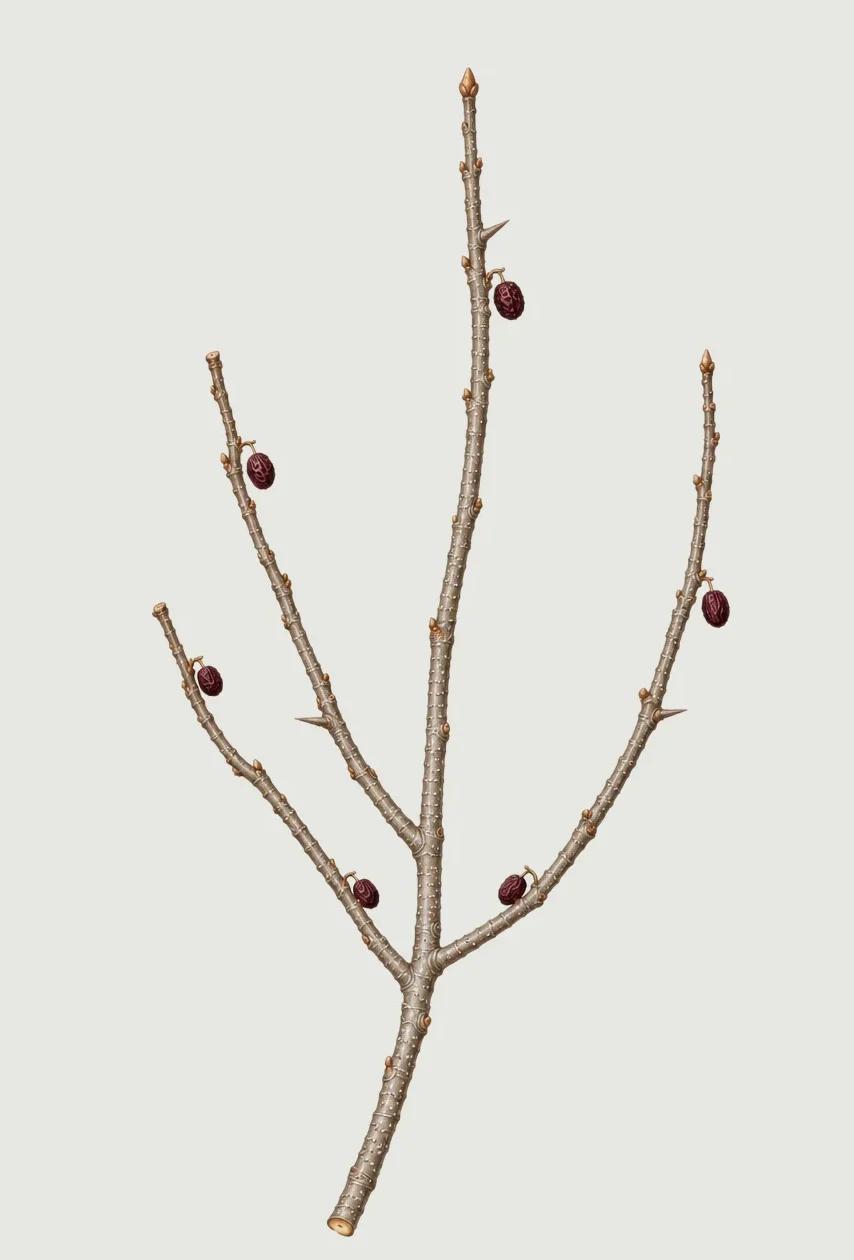
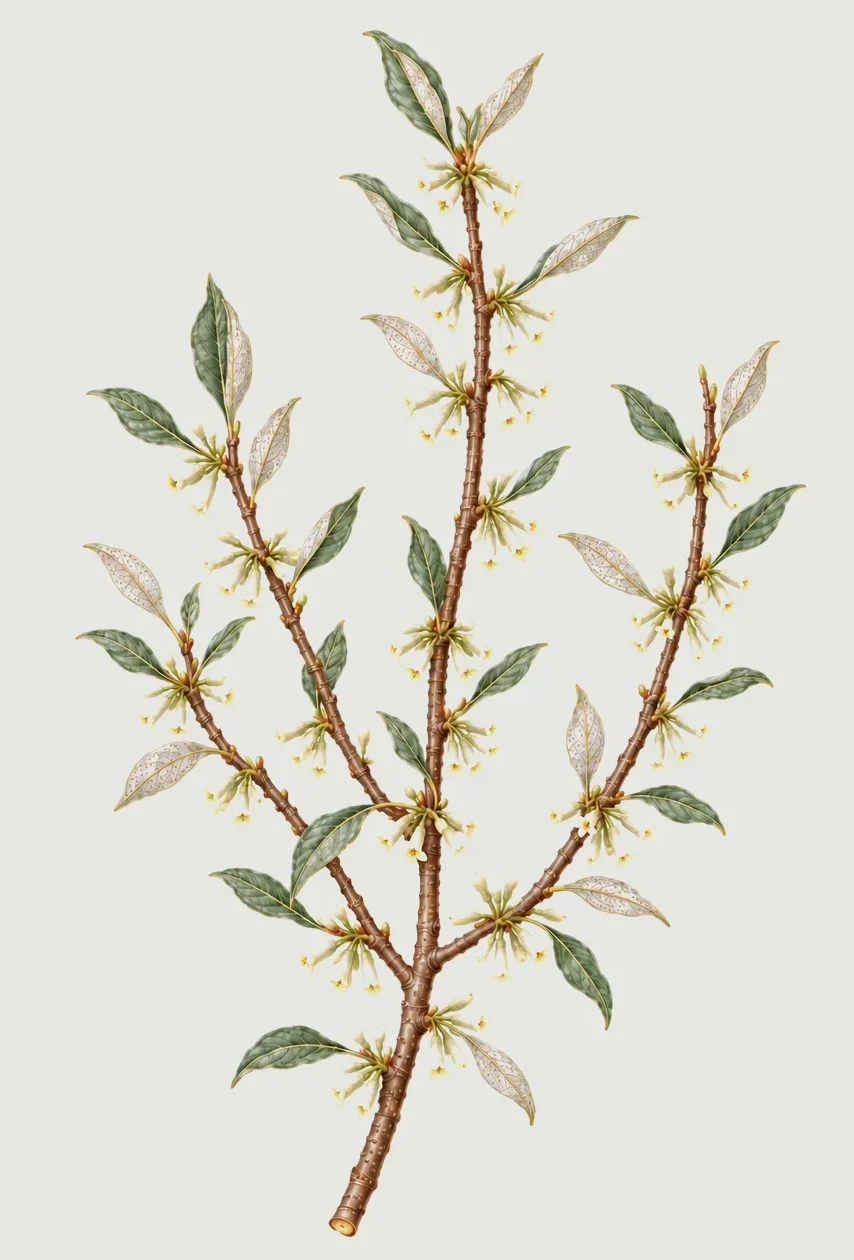
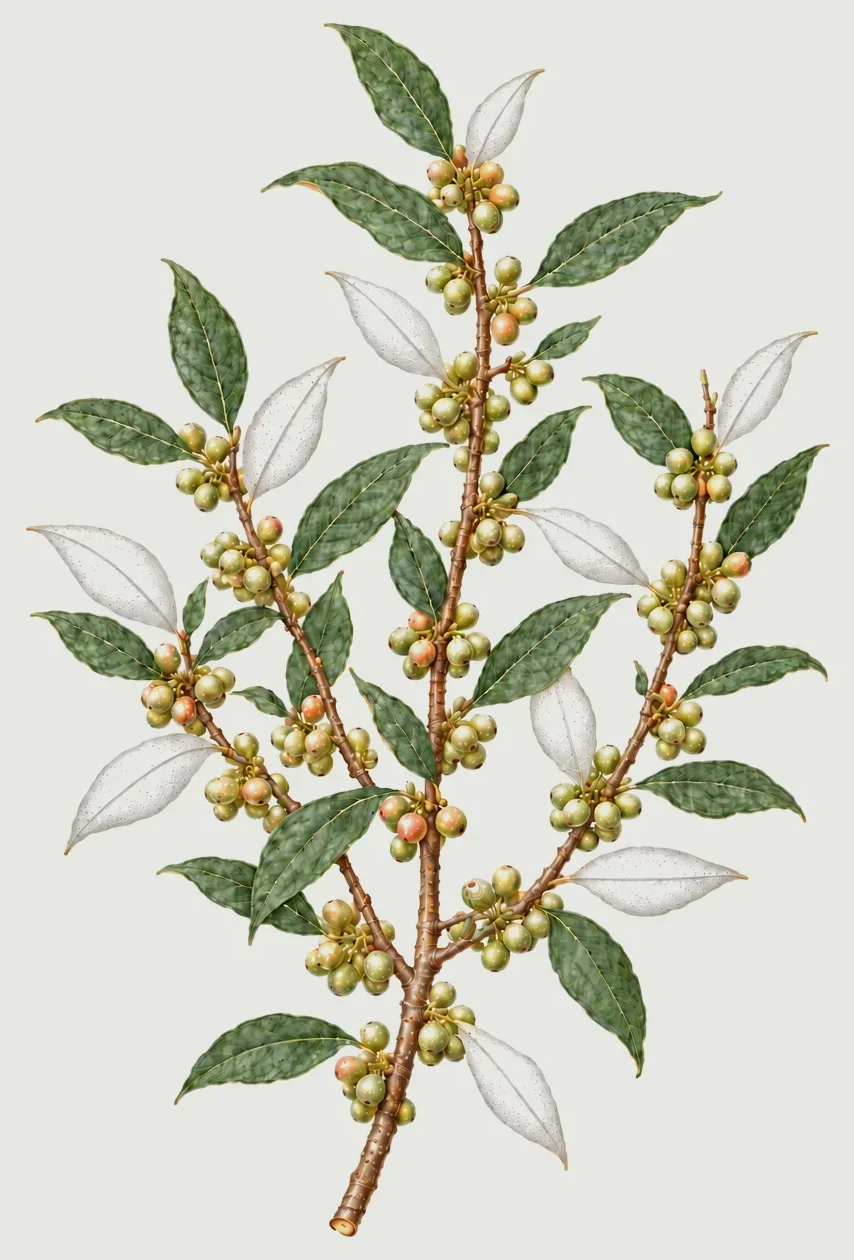
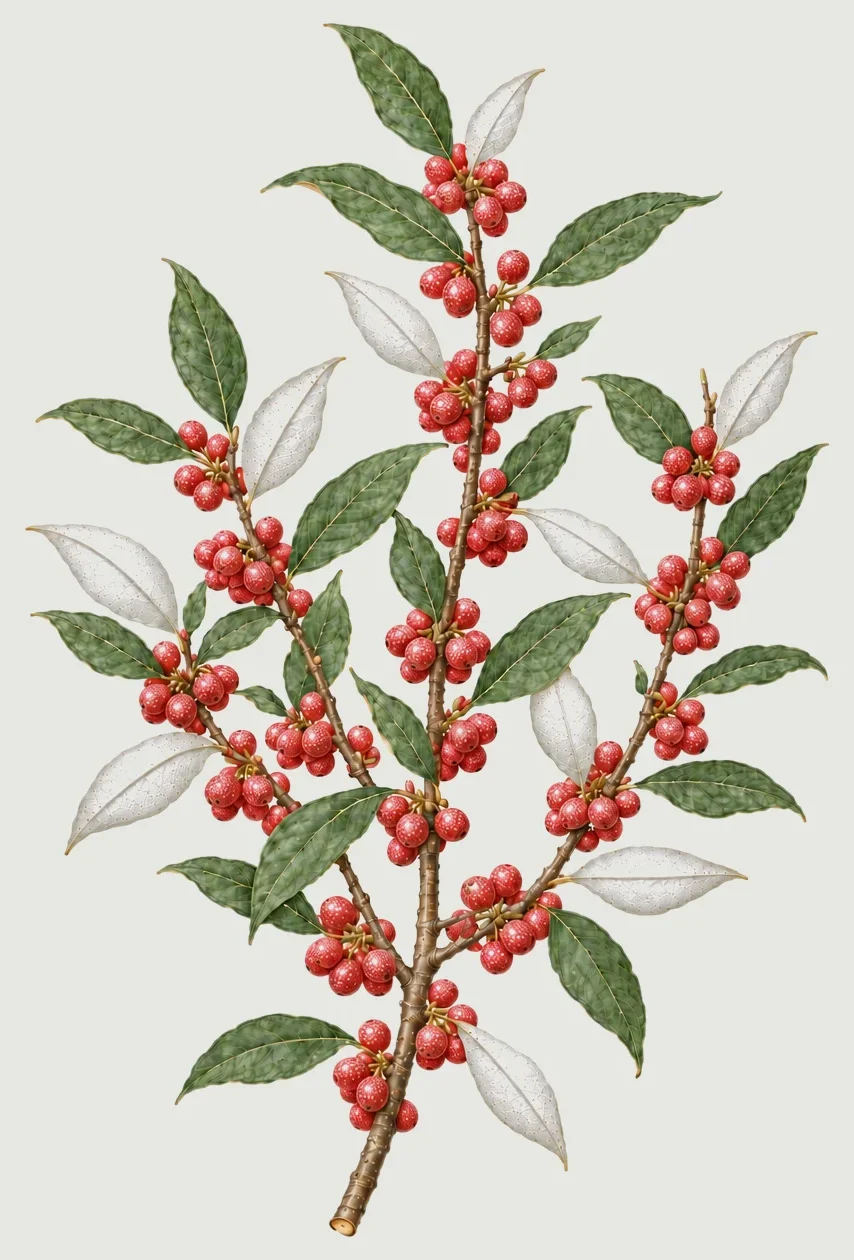
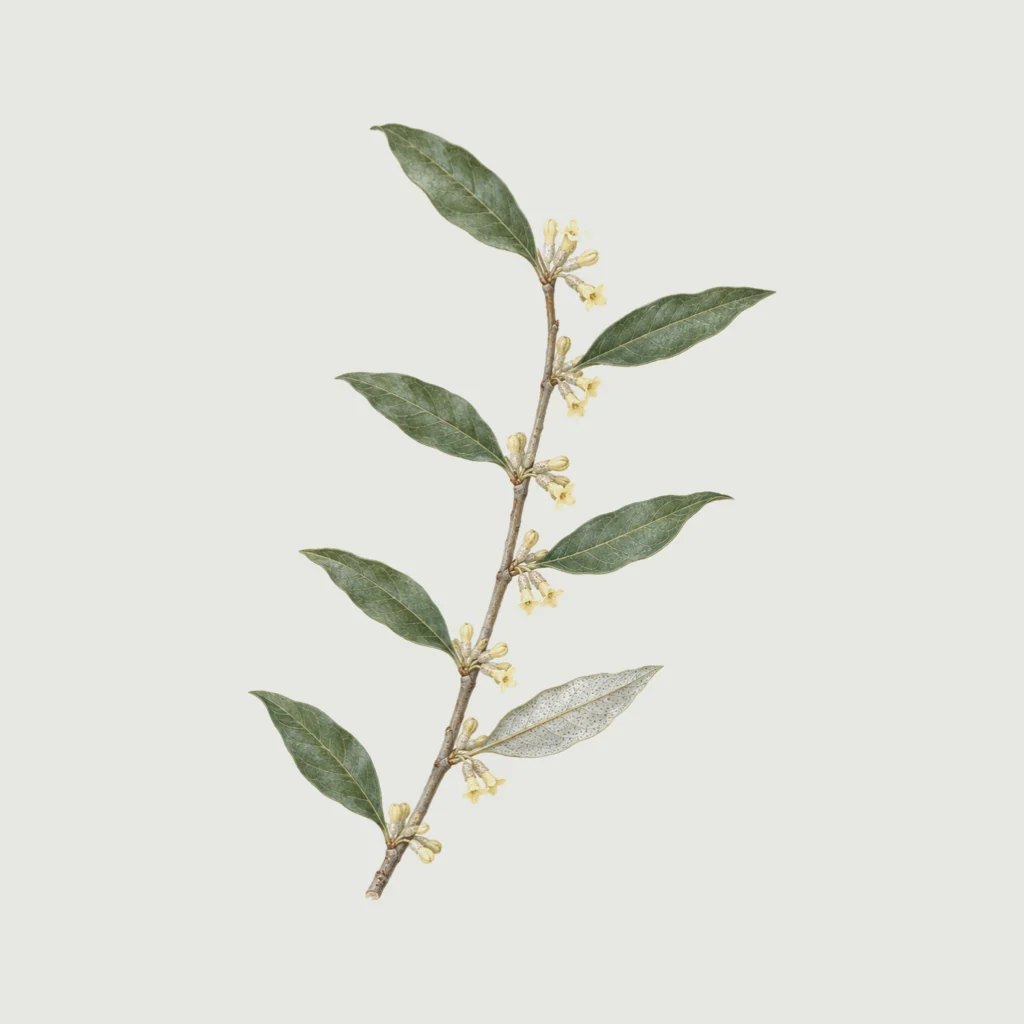
- LeavesOne per joint, alternating; smooth edges.
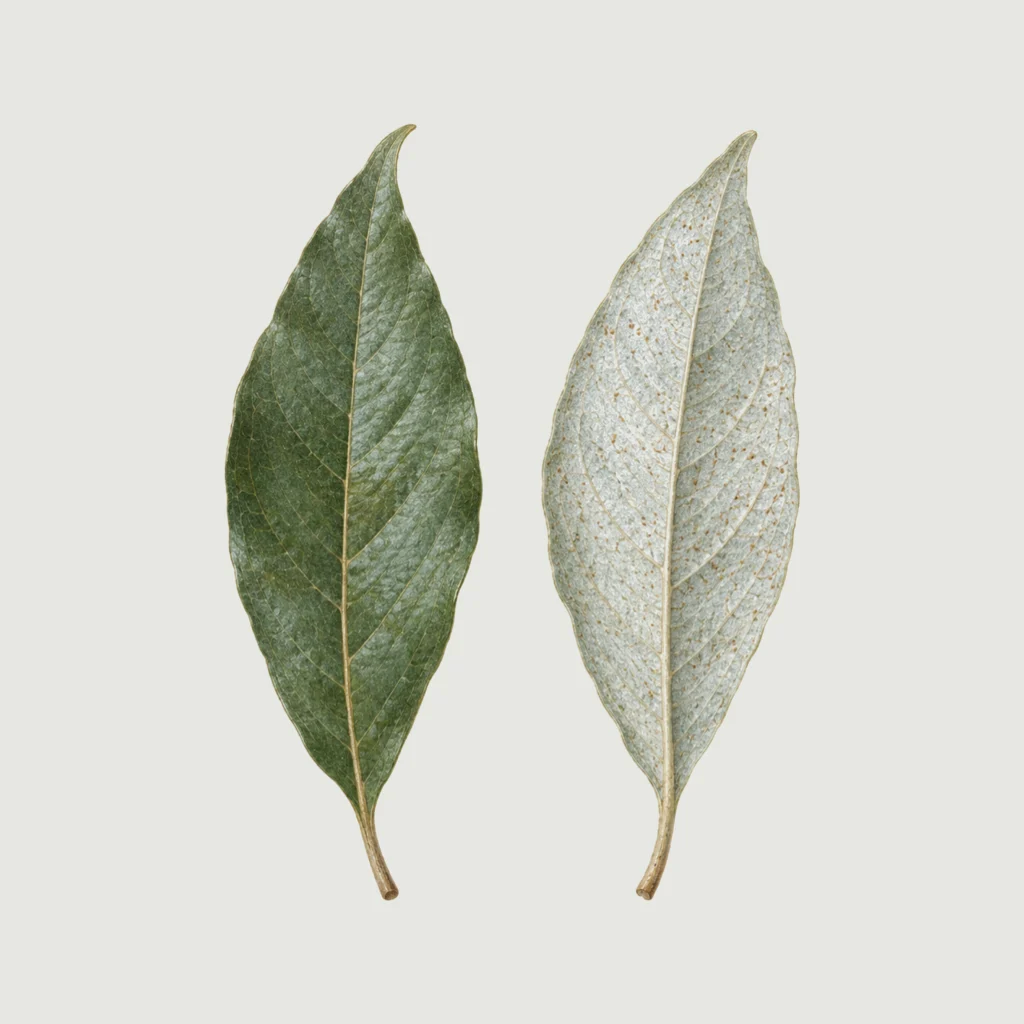
- UndersidePowdery silver beneath, silver-green above.
- ClustersFruit crowds the twig at each leaf joint.
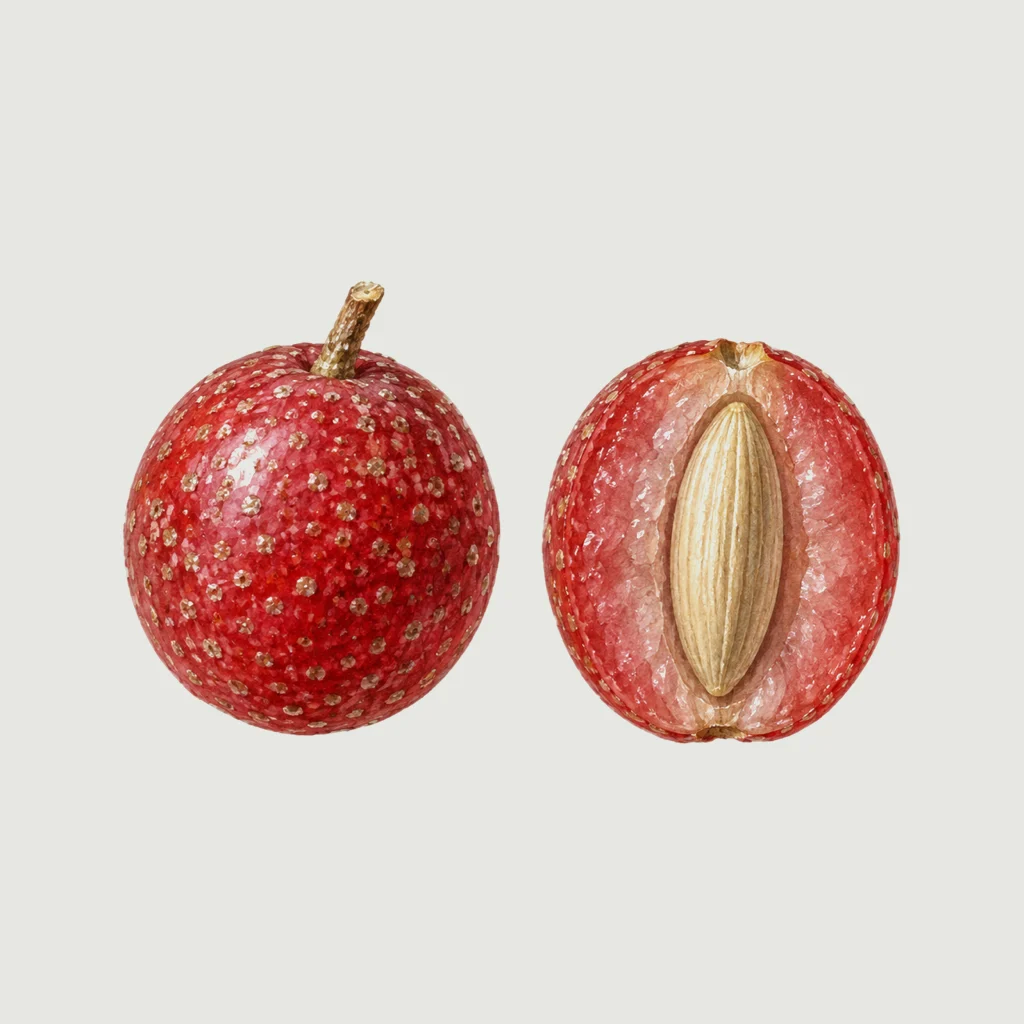
- SpecklesRed fruit, flecked with silver and gold.
October. Ripe: August to November in Central Illinois. Taste each tree first.
- LeavesOne per joint, alternating; smooth edges.
- UndersidePowdery silver beneath, silver-green above.
- ClustersFruit crowds the twig at each leaf joint.
- SpecklesRed fruit, flecked with silver and gold.
Harvest every one. Plant none.
The autumn berry is the sweet-tart fruit of autumn olive, an invasive shrub. Learn to know it, pick it, and never spread it.
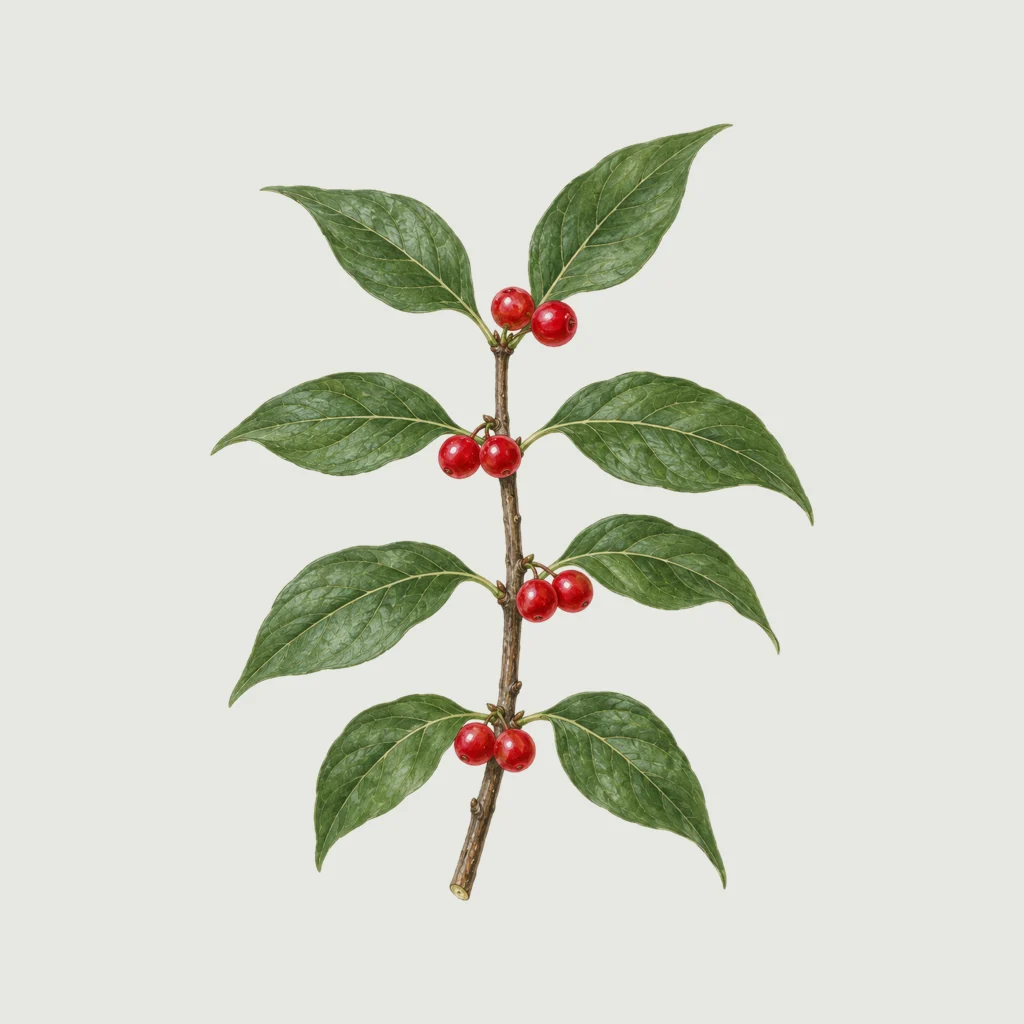
Bush honeysuckle
Glossy berries in pairs; leaves in pairs.
Not this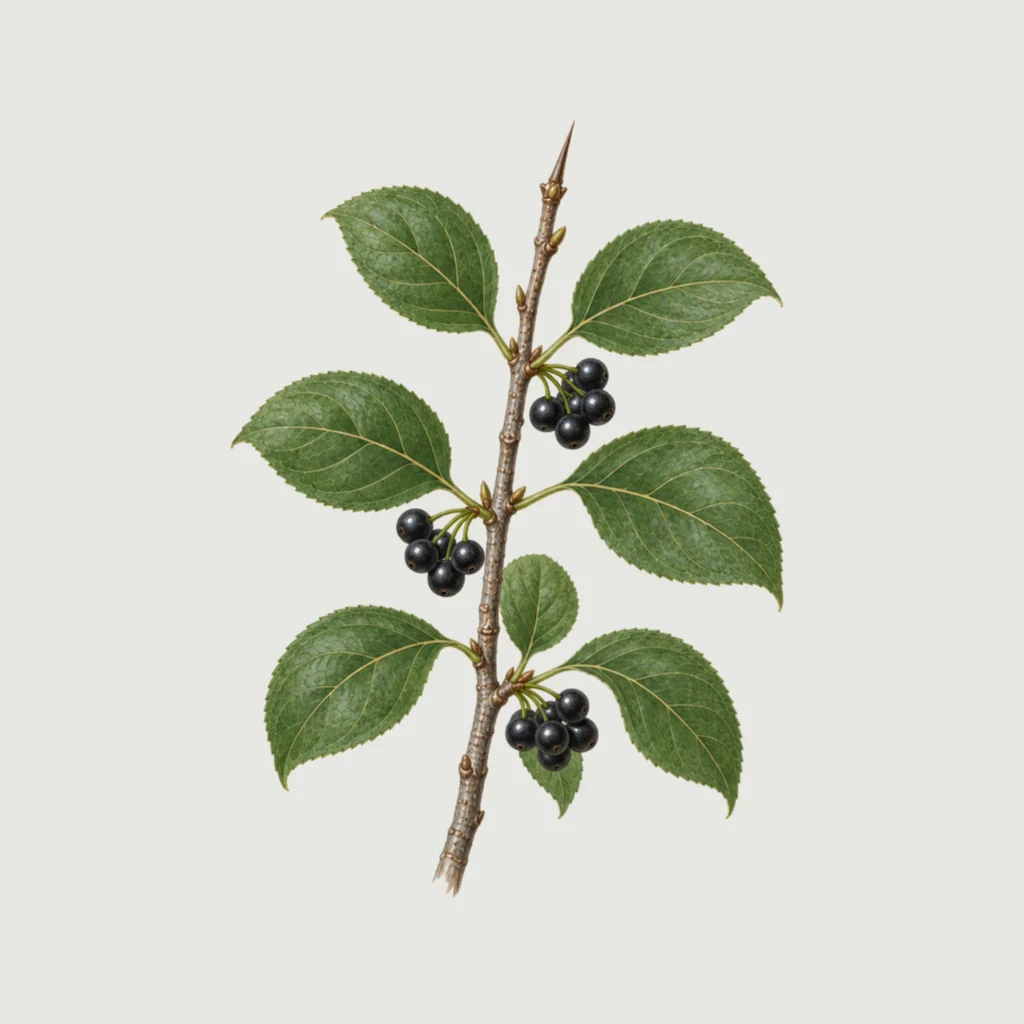
Common buckthorn
Black berries; thorn-tipped twigs.
Not thisKnow it before you pick it.
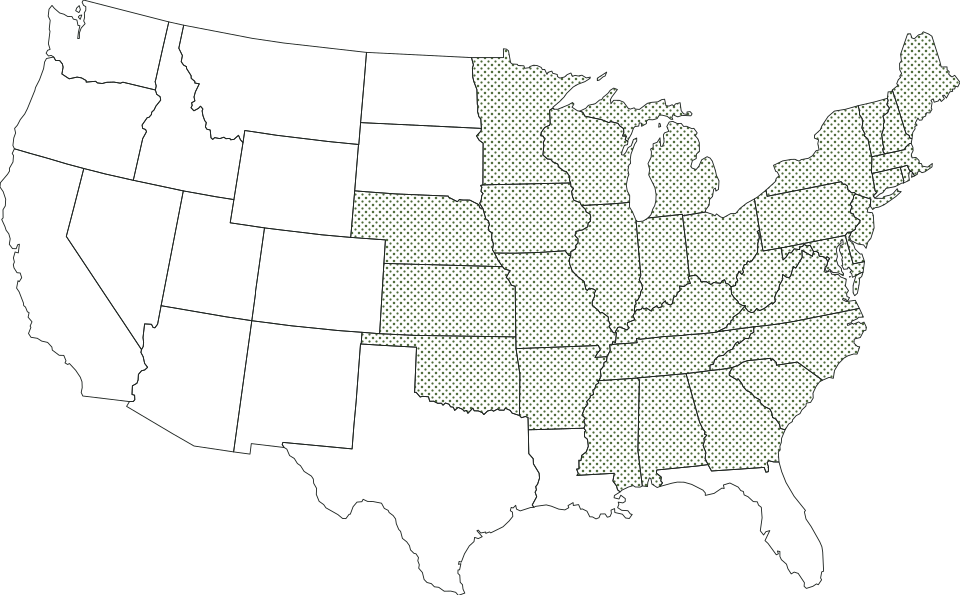
Autumn olive grows along fencerows, field edges, highways and riverbanks. Set it beside the plants people mistake it for.
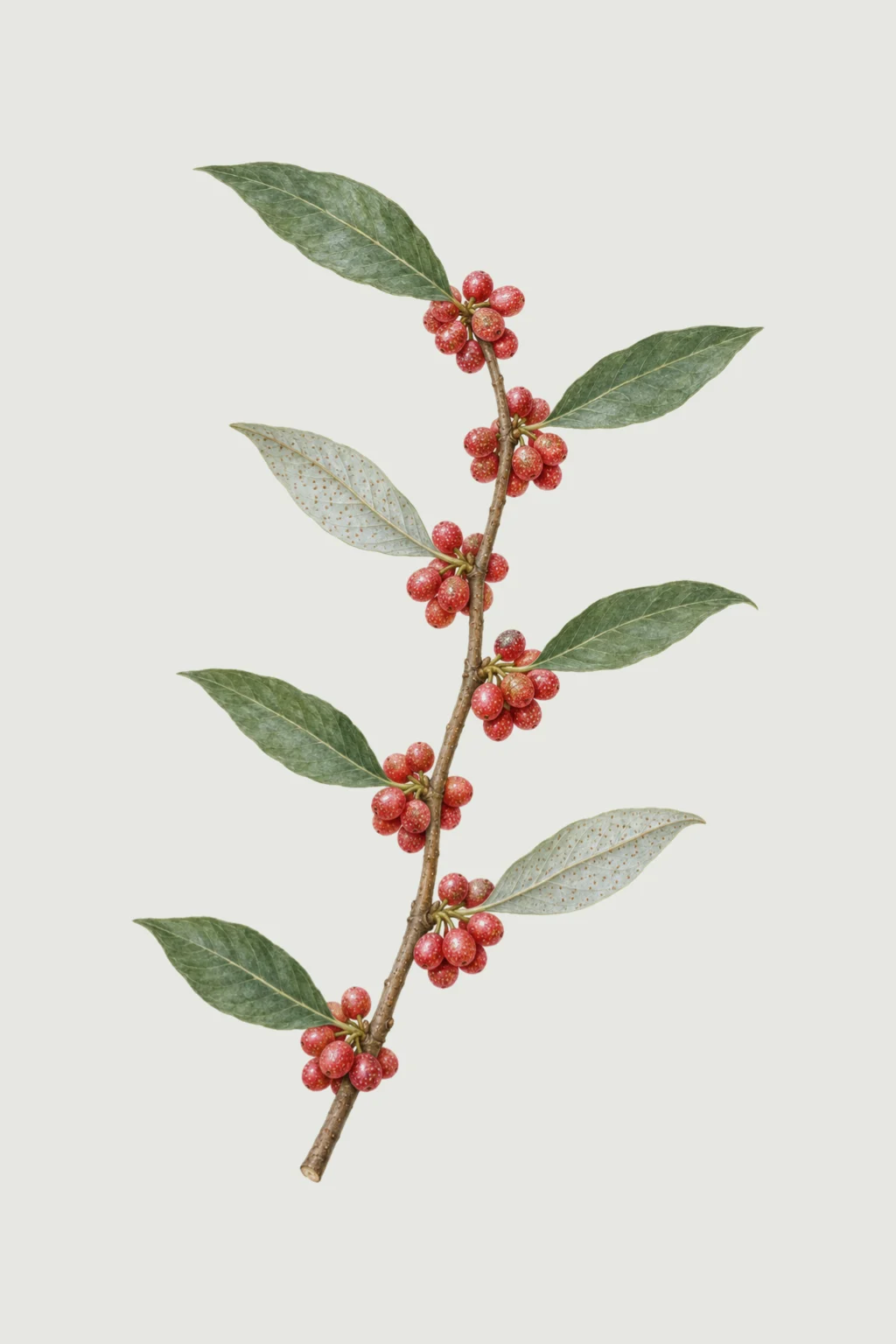
Autumn olive
Elaeagnus umbellataEdible, once confirmed
Bush honeysuckle
Lonicera maackiiNot edible
| Mark | Autumn olive | Bush honeysuckle |
|---|---|---|
| Leaves | One per joint, alternating. Silver underneath. | In opposite pairs. Green on both sides, with a long pointed tip. |
| Fruit | Red, flecked with gold and silver speckles, in crowded clusters. | Glossy, translucent red, no speckles, sitting in pairs. |
Autumn olive
Elaeagnus umbellataEdible, once confirmed
Common buckthorn
Rhamnus catharticaNot edible
| Mark | Autumn olive | Common buckthorn |
|---|---|---|
| Leaves | Alternating, smooth-edged, silver underneath. | Opposite or nearly so, finely toothed, veins curving toward the tip. |
| Fruit | Red and speckled. | Black and glossy. |
| Twigs | Silvery-brown and scaly. | Often end in a small, sharp thorn. |
Autumn olive
Elaeagnus umbellataEdible, once confirmed
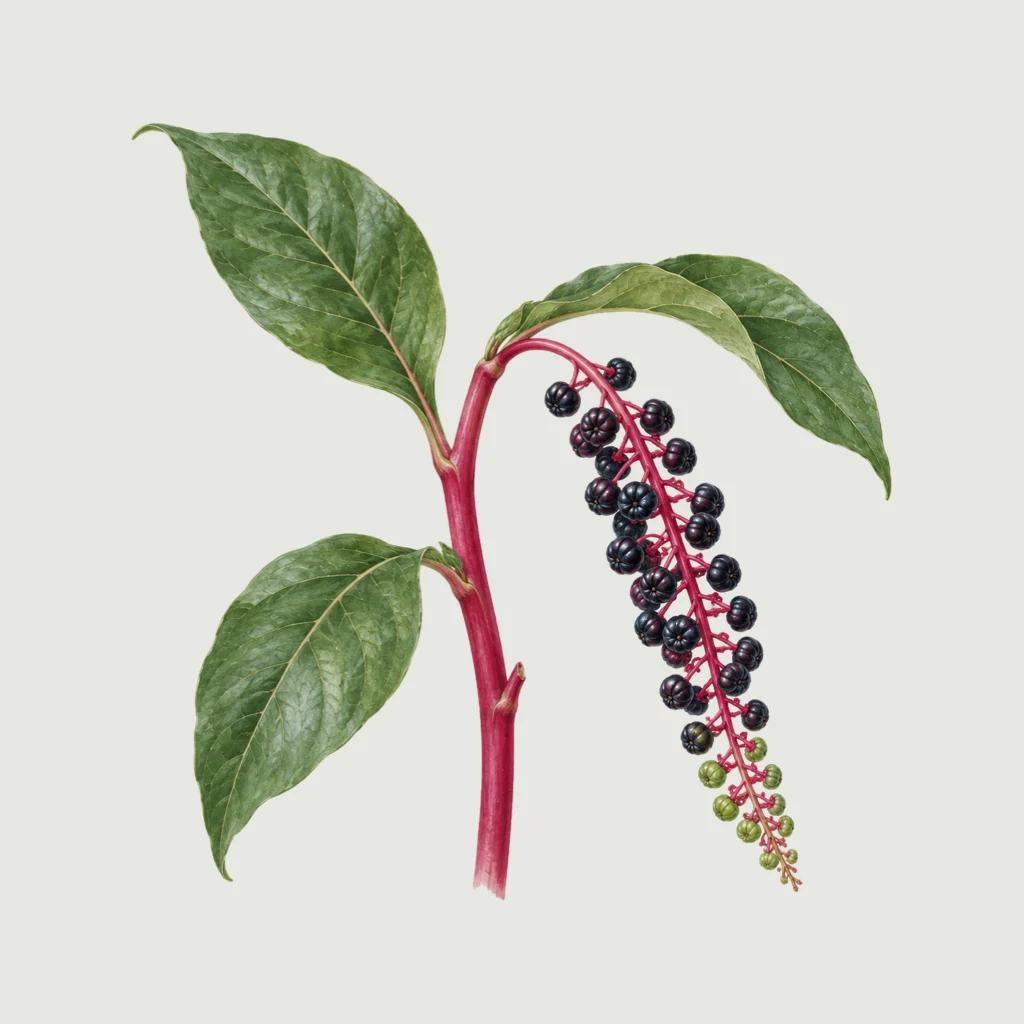
Pokeweed
Phytolacca americanaToxic
| Mark | Autumn olive | Pokeweed |
|---|---|---|
| Plant | A woody shrub or small tree. | A tall, soft-stemmed plant with bright magenta stems. |
| Fruit | Small, round, red, speckled, along the twigs. | Dark purple-black and slightly flattened, in long drooping clusters. |
Autumn olive
Elaeagnus umbellataEdible, once confirmed
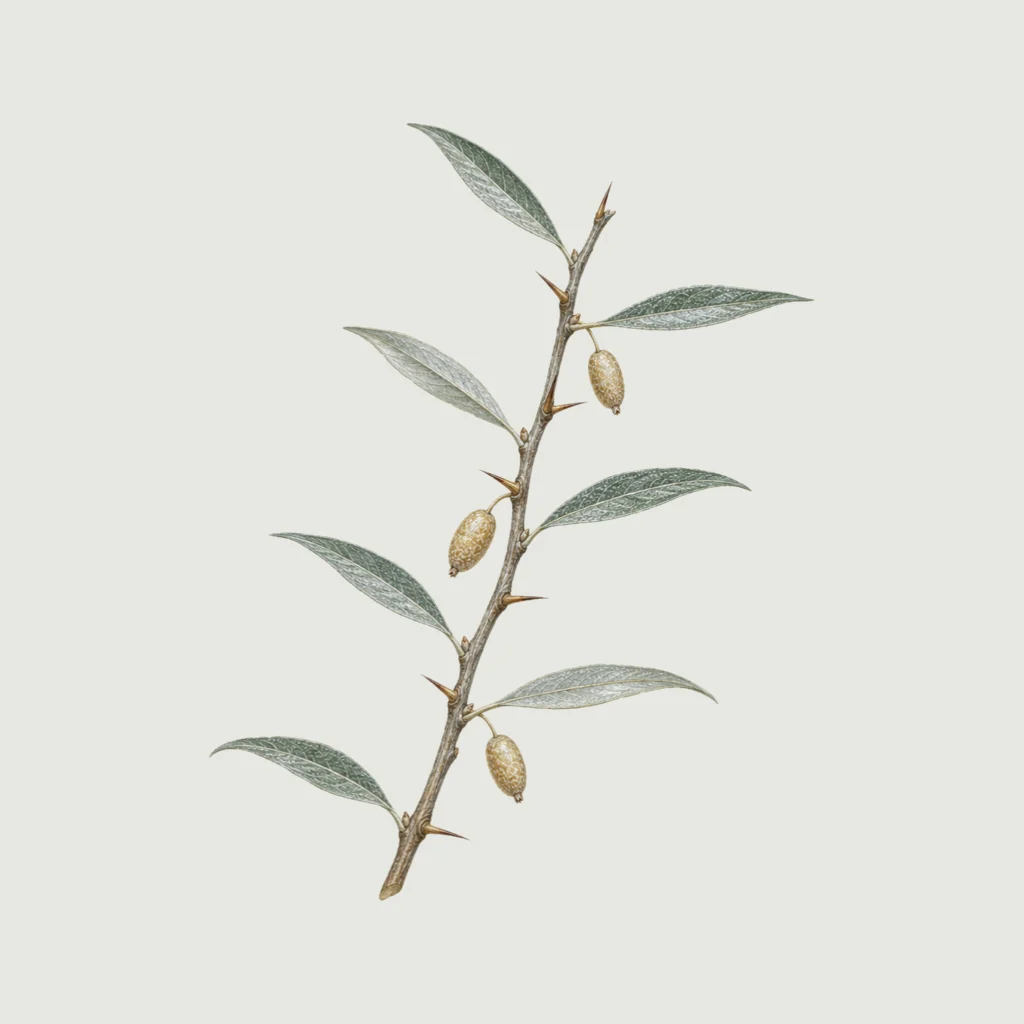
Russian olive
Elaeagnus angustifoliaEdible, but dry
| Mark | Autumn olive | Russian olive |
|---|---|---|
| Leaves | Silver-green on top, silver underneath. | Very narrow and silvery on both sides. |
| Fruit | Plump, juicy and red. | Sweet but dry and flossy, yellowish to silvery tan. |
Look at plenty of pictures, and ask an expert before eating anything unfamiliar. These plates help you look; an experienced forager confirms.
Tick the marks.
Hold a branch in your hand and work down the list. Each mark you tick is circled on the plate.
Five marks, all of them.Tick each one you can see on the branch in front of you.
Foraging rules, and a request.
Eat as many as you like. Just don't help the tree travel.
Be sure what it is.
Before eating any wild food, have it properly identified by an experienced forager.
Don't mistake honeysuckle, pokeberry, buckthorn, or any other inedible or toxic fruit for autumn berries.
Take only what you need.
Ask permission from the landowner, and from the plant itself.
Don't eat wild food that grew somewhere unclean.
Never spread it.
Autumn olive is considered invasive in North America. Where it grows now, it flourishes. It shouldn't go anywhere new.
Planting it is against the law in some places, and poor land stewardship everywhere else.
Above all, thank the planet for a delicious and nutritious gift.
Ripe is a taste, not a date.
Berries turn red before they're ready, and unripe ones dry out your whole mouth. Taste every tree; when a few berries are good, the rest of that tree will be too.
| Region | Jun | Jul | Aug | Sep | Oct | Nov | Dec |
|---|---|---|---|---|---|---|---|
| Central Illinois | Ripe August through November | ||||||
It was growing there the whole time.
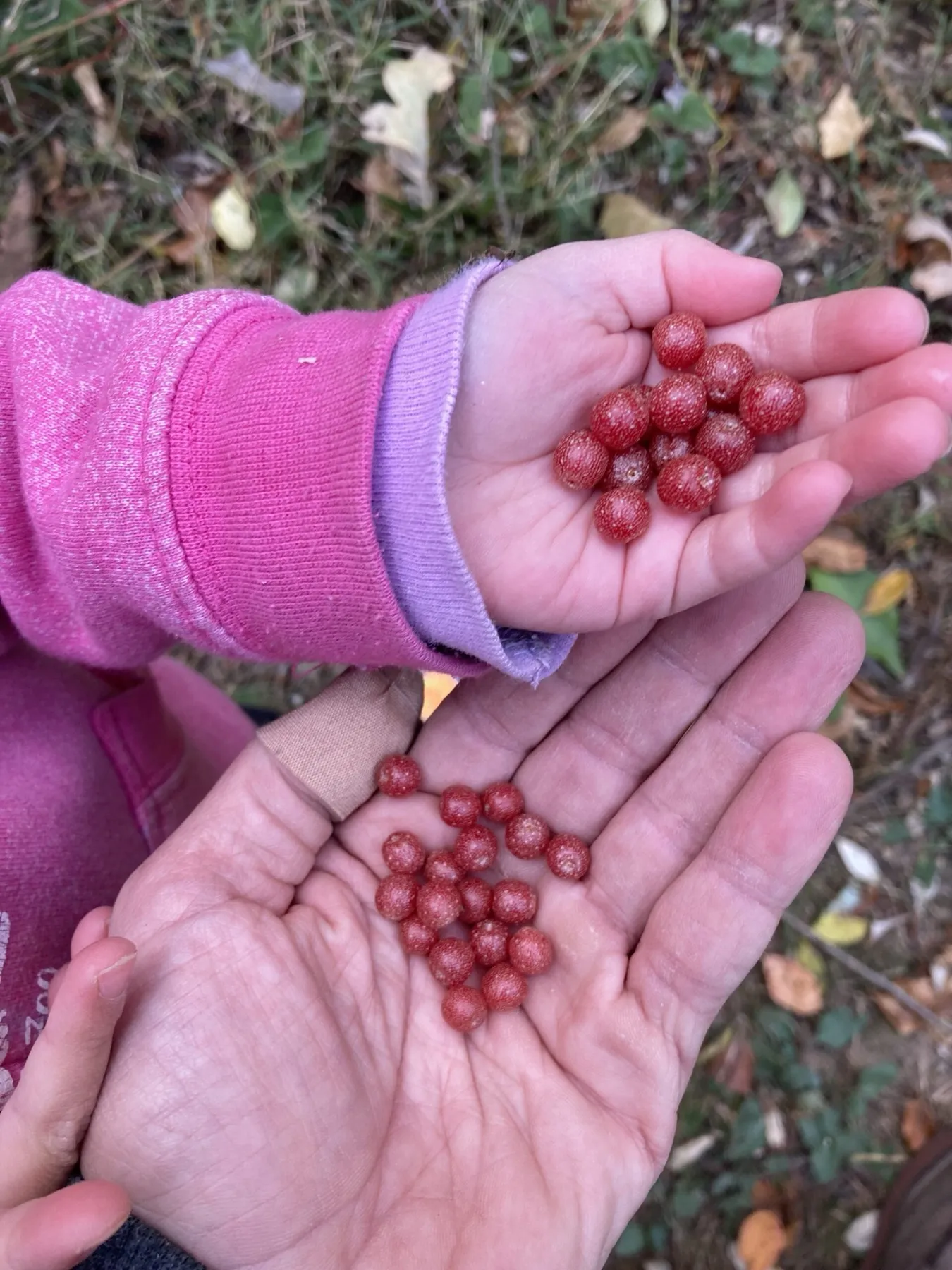
Most of us drive past it. Autumn olive grows along fencerows, field edges and highway ramps in the places we already live, and nearly all of its fruit goes uneaten.
Picking it is a child's afternoon for a grown-up: a stick, a tarp, stained fingers, a taste straight off the branch. For a child it is a grown-up's job: real work that fills a real bag with real food.
Once you can name the shrub beside your road, you start to notice what else is within reach, and what you've been walking past. Looking costs nothing. Here's what we think it's about.
A new flavor in familiar food.
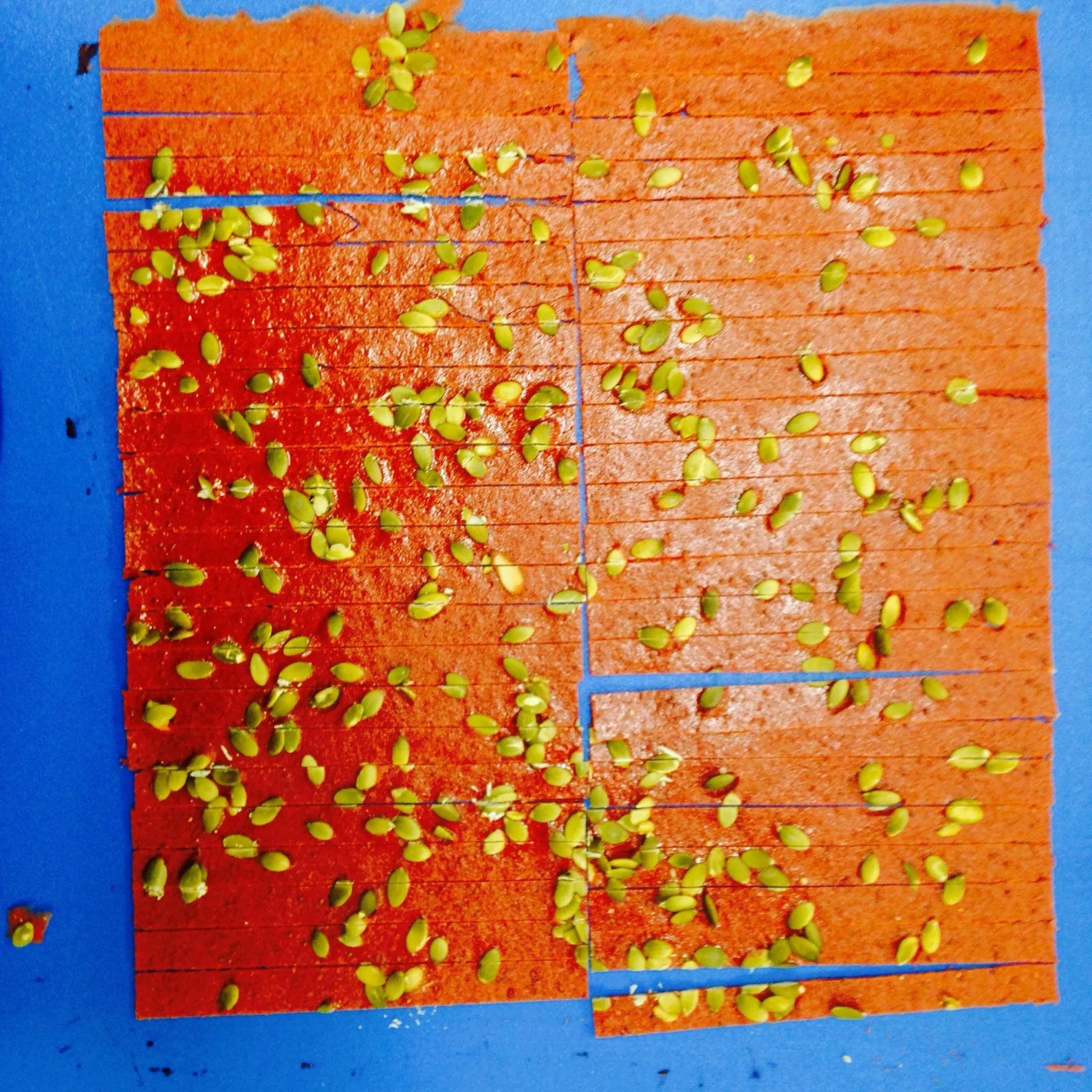
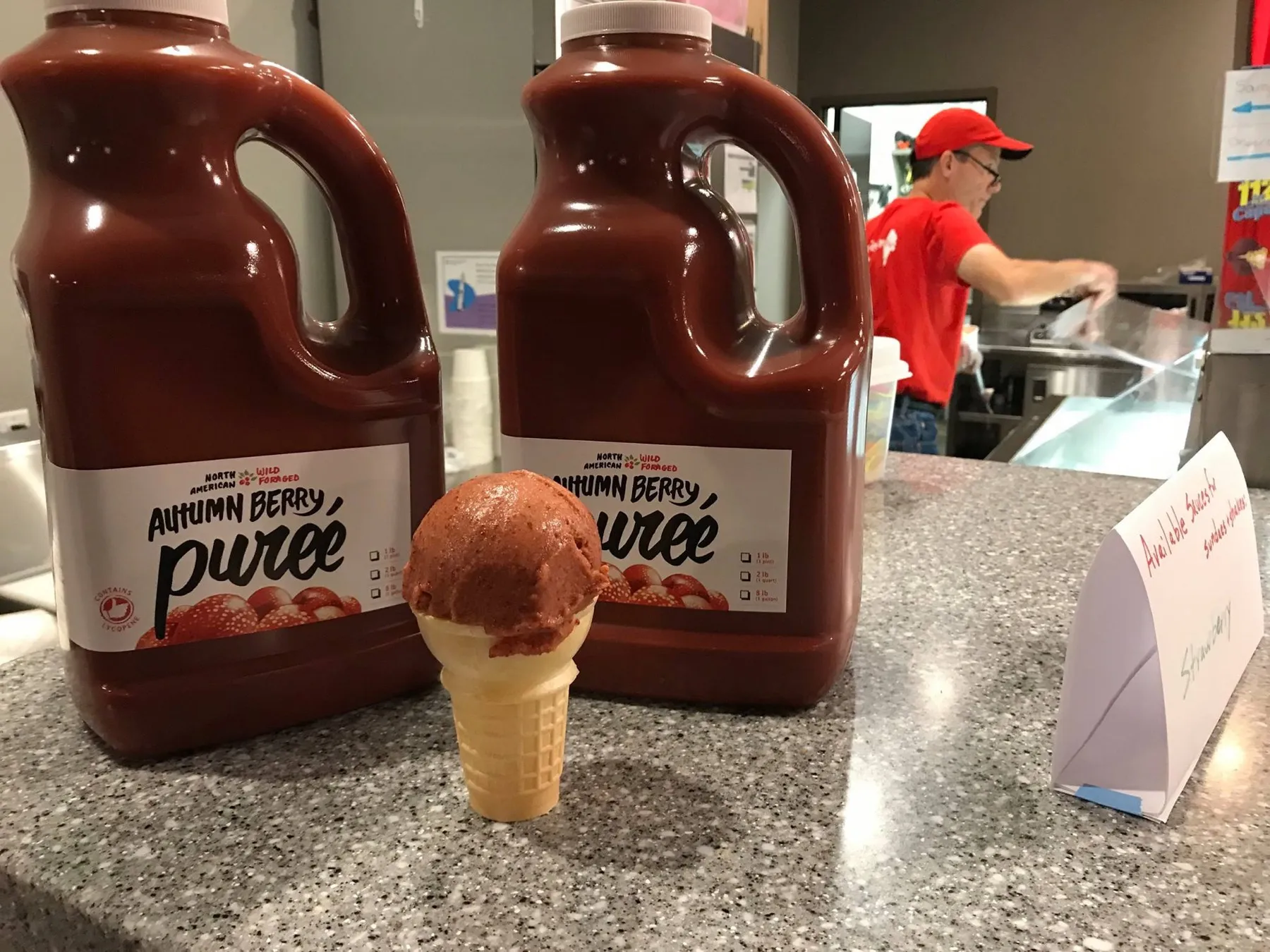
Since 2010 we've worked with food artisans in Central Illinois, Chicago and beyond to put autumn berries into:
- Jam
- Dried fruit snacks
- Chia pudding
- Ice cream
- Doughnuts
- Salad dressing
- Cream cheese spread
- BBQ sauce
- Beer
- Mead
- Wine
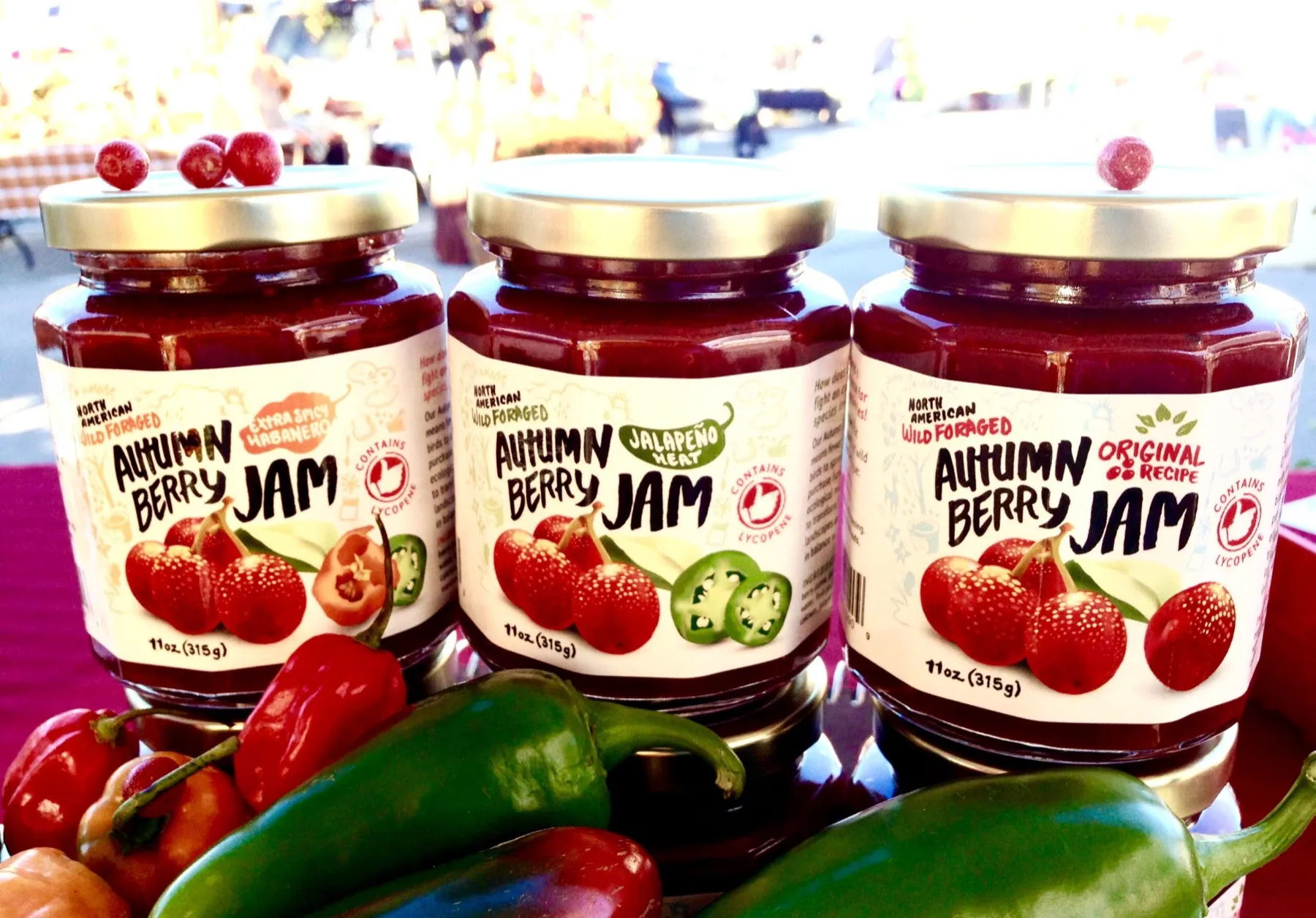
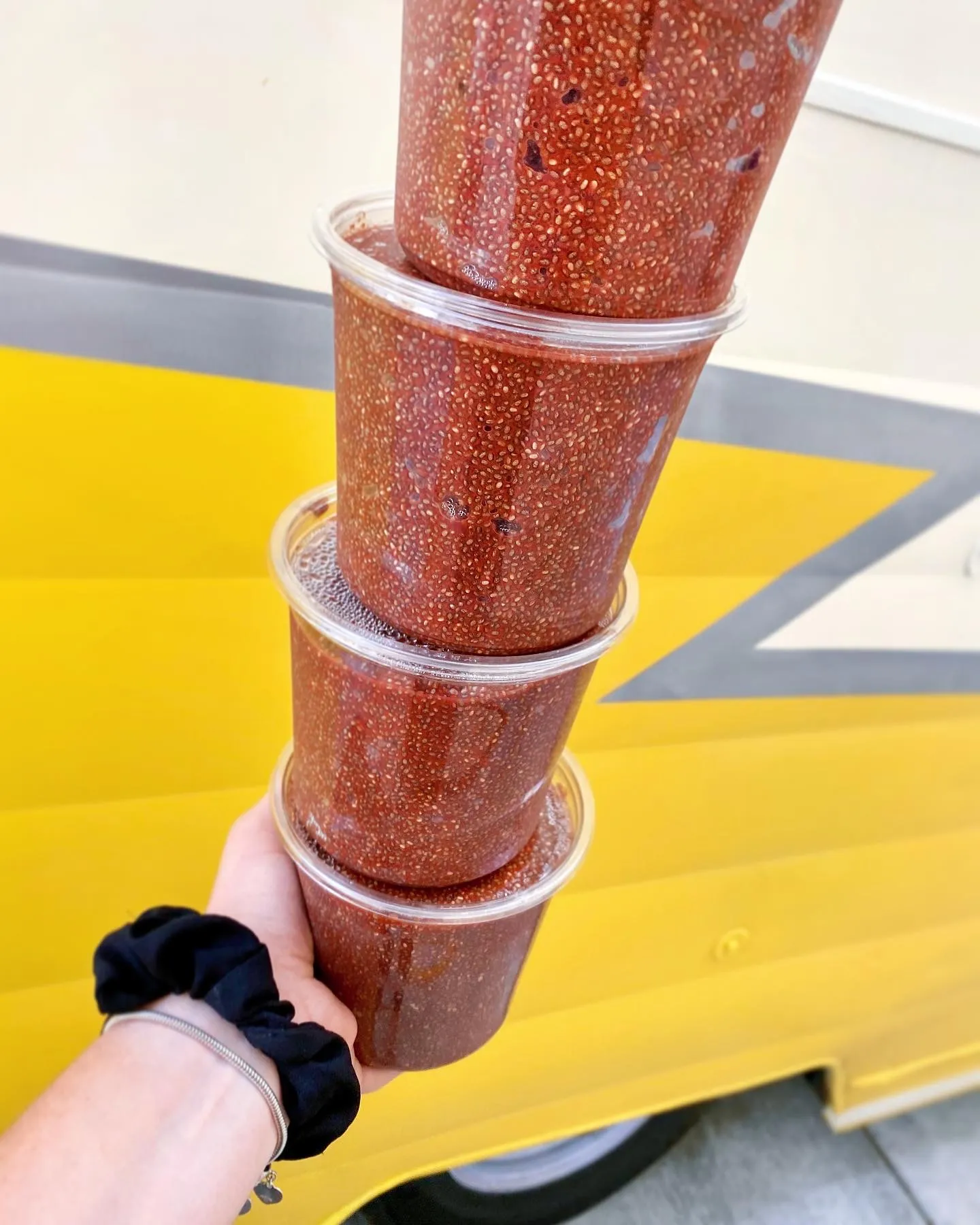
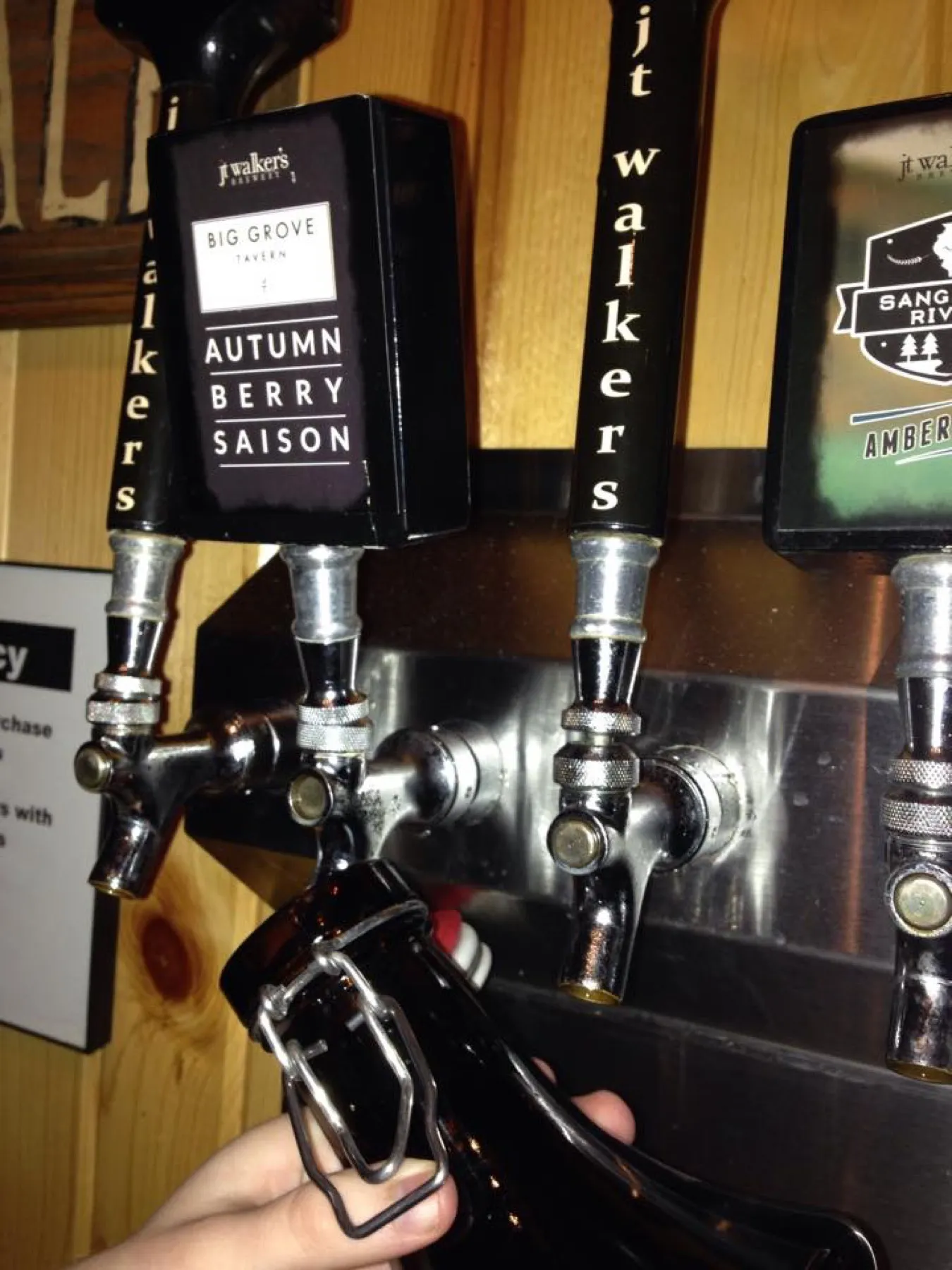
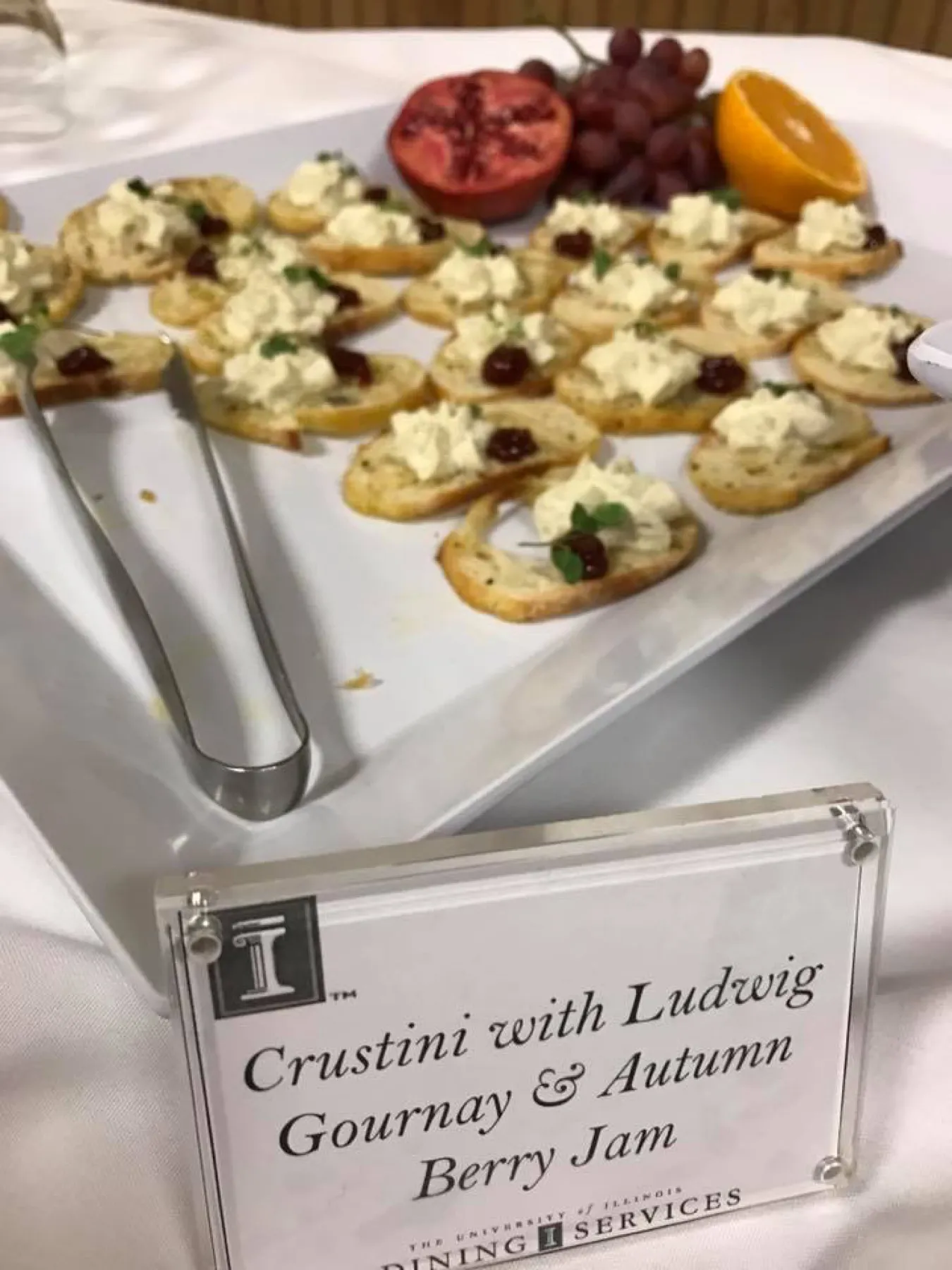
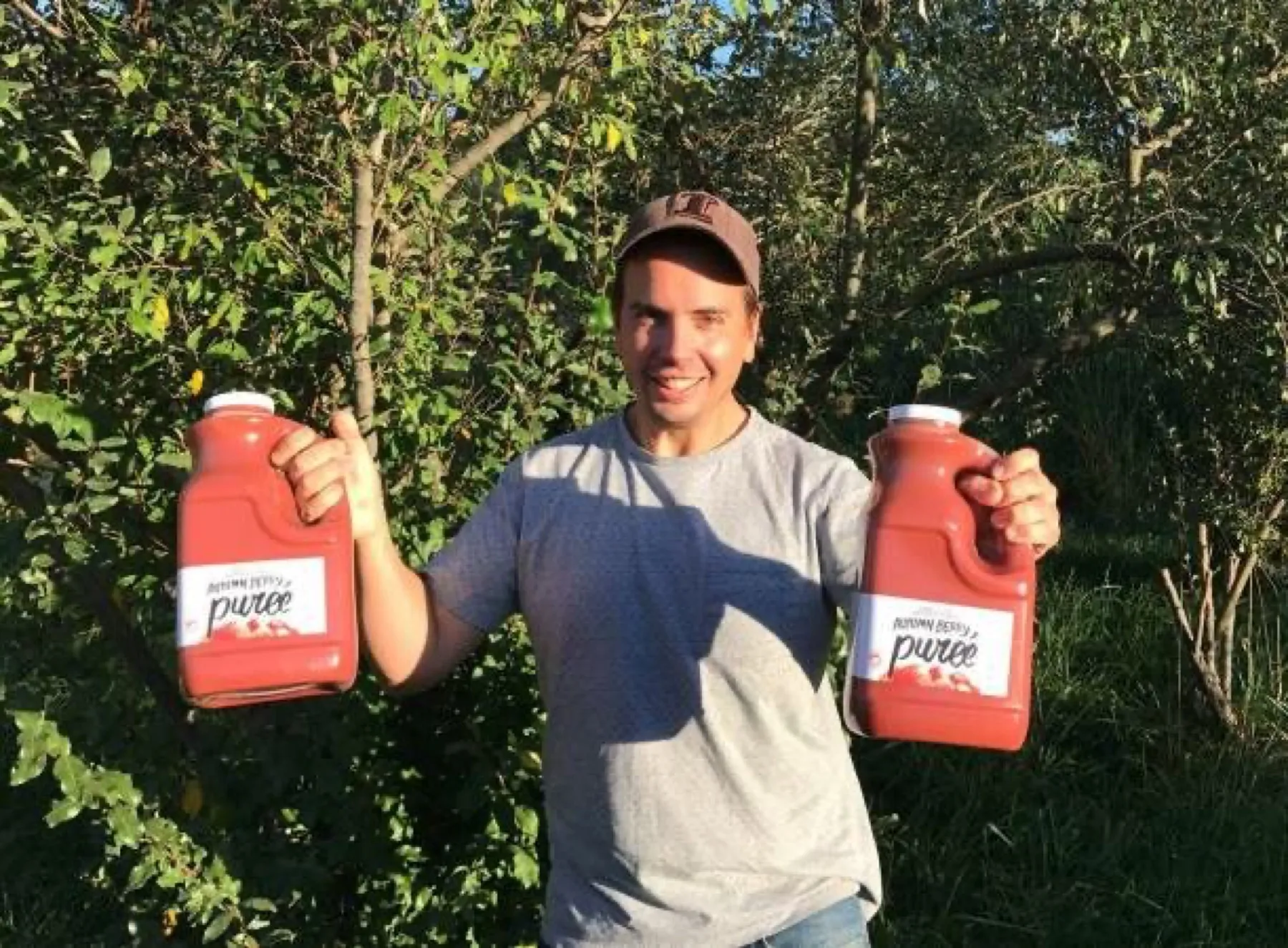
Make jam, not war.
Autumn olive is a problem people made, and it is also a resource nobody is using. We started Autumn Berry Inspired to promote the fullest use of what's already here, and to start a chain reaction of planet-saving projects.
Dustin and his team worked out how to harvest and process the berries, and they share those methods freely so more people get out, connect with their local land, enjoy it, and look after it.