Questions first. Then the tarp.
What people ask us most about autumn berries, followed by the method we use to turn a harvest into seedless puree.
Skip to the method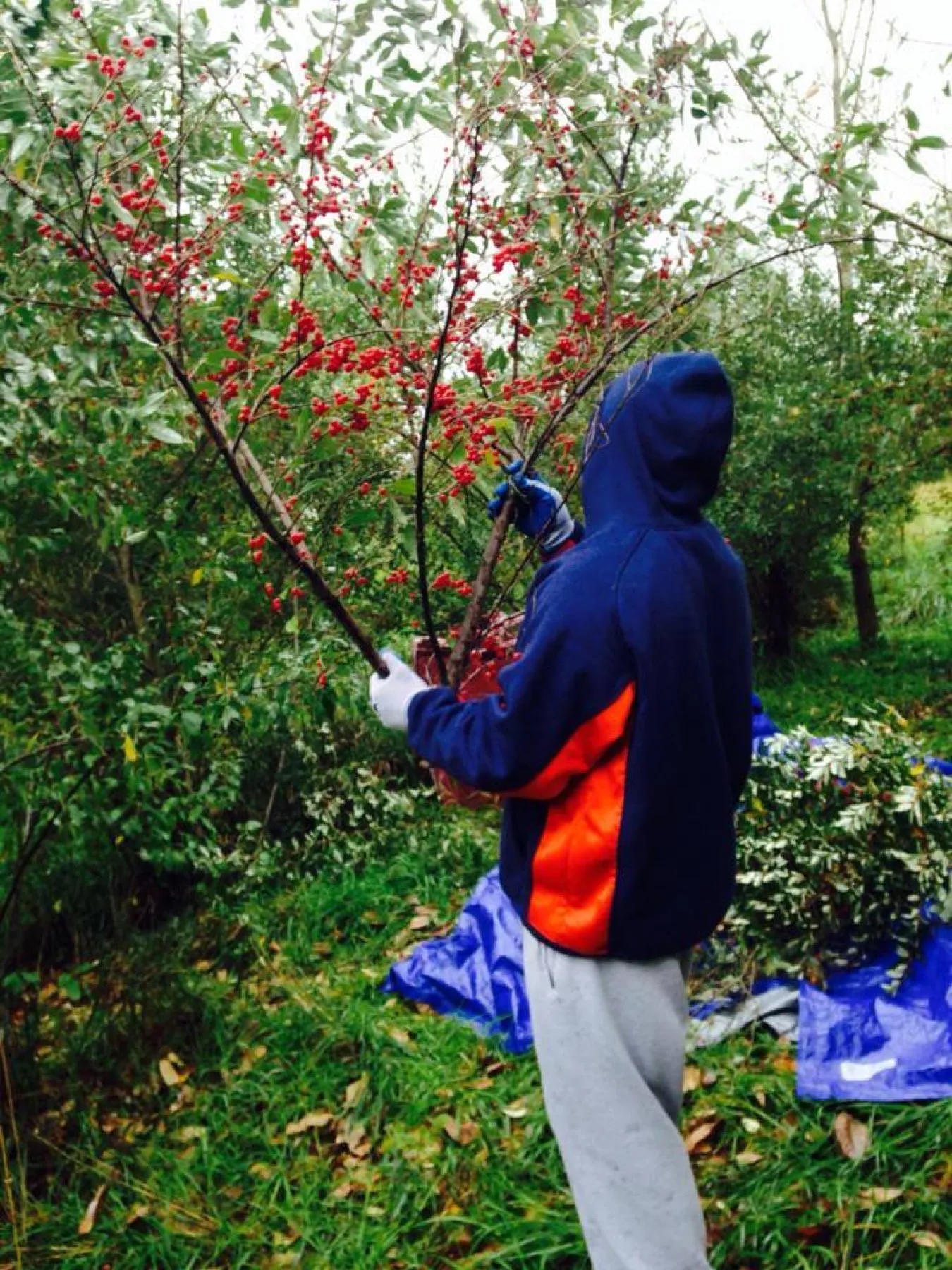
Asked and answered.
Select a question to read the answer.
What do autumn berries taste like?
Ripe autumn berries taste sweet-tart, a bit like cranberries and pomegranate seeds. Eat them fresh, frozen or dried, or cook them down to an unsweetened, seedless puree.
Each berry has one small edible seed with a light almond taste. The seed has a soft but fibrous hull: chew it up and swallow it, or spit it out.
Are they good for you?
The following is not medical advice.
Autumn berries have been found to contain protein; vitamins A, C and E; flavonoids; essential fatty acids; and lycopene, a carotenoid that is a powerful antioxidant phytonutrient.
Is autumn olive the same as Russian olive?
No. They're close relatives that look alike. Autumn olive is Elaeagnus umbellata; Russian olive is Elaeagnus angustifolia.
Russian olive fruit is edible and sweet, but dry and flossy. Autumn olive fruit is plump and juicy.
In Persian culture, Russian olive is a symbol of love called senjed, and it's a traditional part of the Iranian New Year table.
Is autumn olive invasive?
Yes. It's considered invasive across much of North America. It thrives on poor soil, few of its seedlings die, and it matures within a few years, so it can outcompete native plants.
To protect native ecosystems, which are shrinking and precious, follow your local ordinances, and don't plant autumn olive or help it spread where that's prohibited.
When are they ripe?
Unripe autumn berries are extremely sour and astringent; they leave your mouth dry and fuzzy. The fruit turns red before it's fully ripe, so taste from each tree before you harvest it.
Luckily, the berries on one tree tend to ripen together. If a few taste good, the rest on that tree will too. Different wild trees can ripen days or weeks apart, which stretches the harvest.
In Central Illinois, trees tend to ripen from August through November.
Do I need to wait for the first frost?
People often say the fruit is sweeter after the first frost, and wait that long. The trouble is that by then wind, ripeness and birds have usually taken most of it. The dense clusters you hope for are down to a few strays, and the harvest isn't worth the time.
There's usually a sweet spot before frost, when the sweetness has climbed and the astringency has dropped far enough. To catch it, visit and taste your trees daily or weekly through your region's harvest window.
Is any part of the plant poisonous?
No. The fruit, stems, branches, leaves and wood are all non-toxic. Unlike elderberry, there's no need to pick off every stem, especially if you're going to cook and process the fruit.
Make sure you can properly identify the tree first.
How do I identify autumn olive?
The leaves are unlobed, silver-green on top and powdery silver underneath. The berries are textured with gold speckles.
Look at plenty of pictures, and ask an expert before you eat anything unfamiliar, especially berries. Our field-mark checklist is a place to start.
What can you make with them?
Eat them fresh, frozen or dried, or cook them into seedless puree, which goes into almost anything. Cooks we've worked with have made jam, fruit leather, chia pudding, ice cream, sorbet, doughnuts, salad dressing, cream cheese spread, BBQ sauce, lemonade, beer, mead and wine.
The recipe films are a good start.
How do I harvest and process them?
It depends on the size of your harvest, but the six steps below are a good place to start.
From branch to seedless puree.
Read this first. Follow the foraging rules. Wear proper protective equipment and stay aware of your surroundings. This description is not professional advice. Autumn Berry Inspired, LLC is not responsible for any injury or property damage related to anyone's personal efforts to harvest. Forage, process and eat autumn olive at your own risk.
-
Harvest
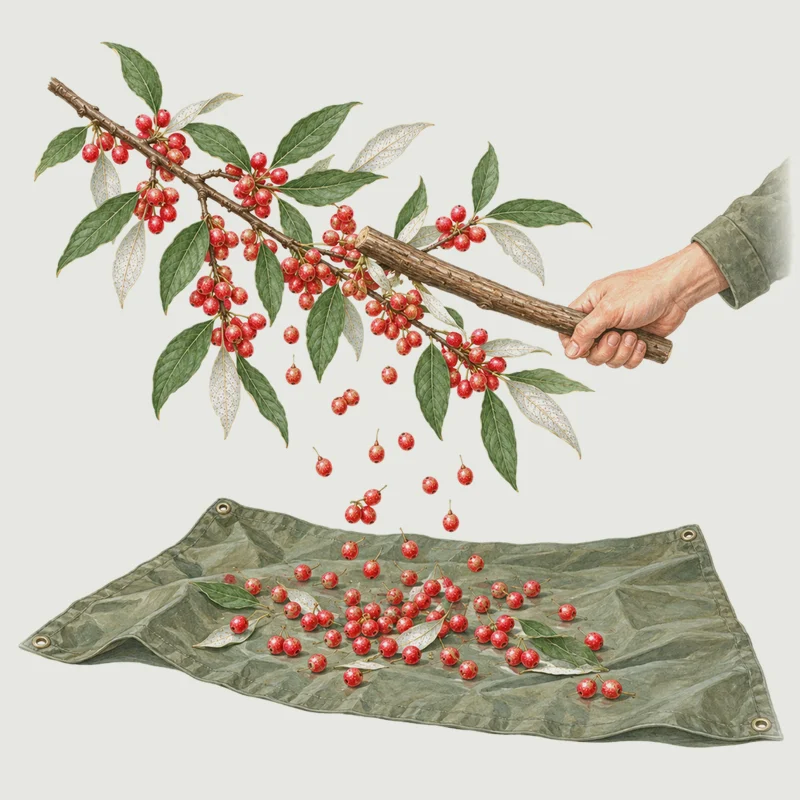
Spread a tarp under a fruit-heavy branch and shake it, or strike the woody part with a stick. Or cut a loaded branch with loppers or a saw, hold it over the tarp and strike it there.
Ripe berries pop right off. If the fruit clings, the tree isn't ready: leave it to ripen and come back another day.
Lift the tarp and funnel the fruit into wide totes lined with bags. Pull out the bulk of the leaves and sticks, but don't be fussy. The rest comes out in the wash.
-
Wash
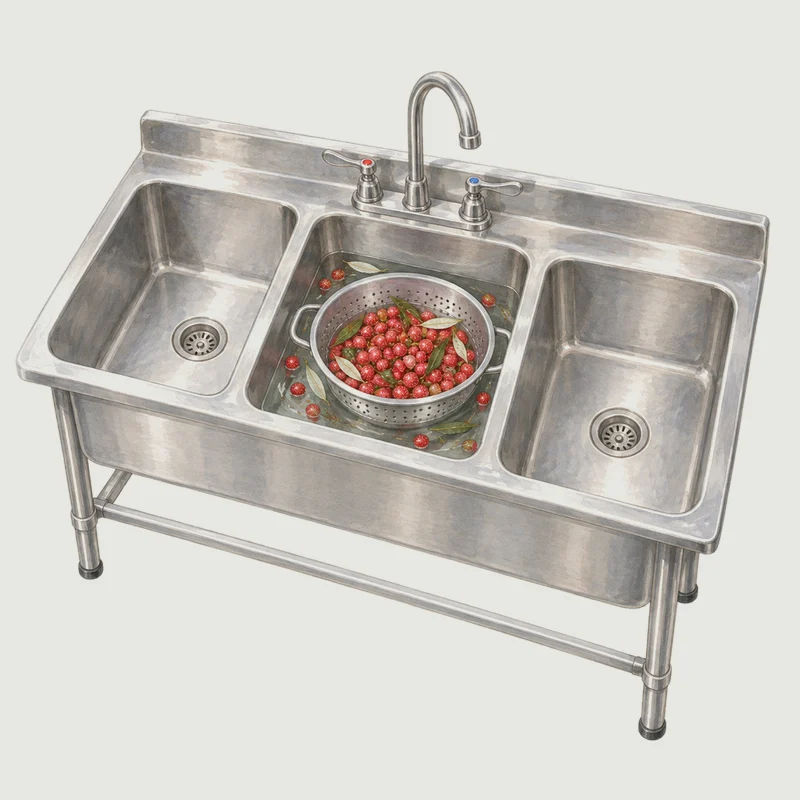
Use a large sink, ideally one with three basins. Work the fruit through in colanders from one basin to the next: the first two float off debris, and the last is for a kill step with a food-safe sanitizer.
Good fruit sinks in the colander. Bad fruit and debris float, so skim off and discard anything that floats. Change the water as needed.
-
Freeze
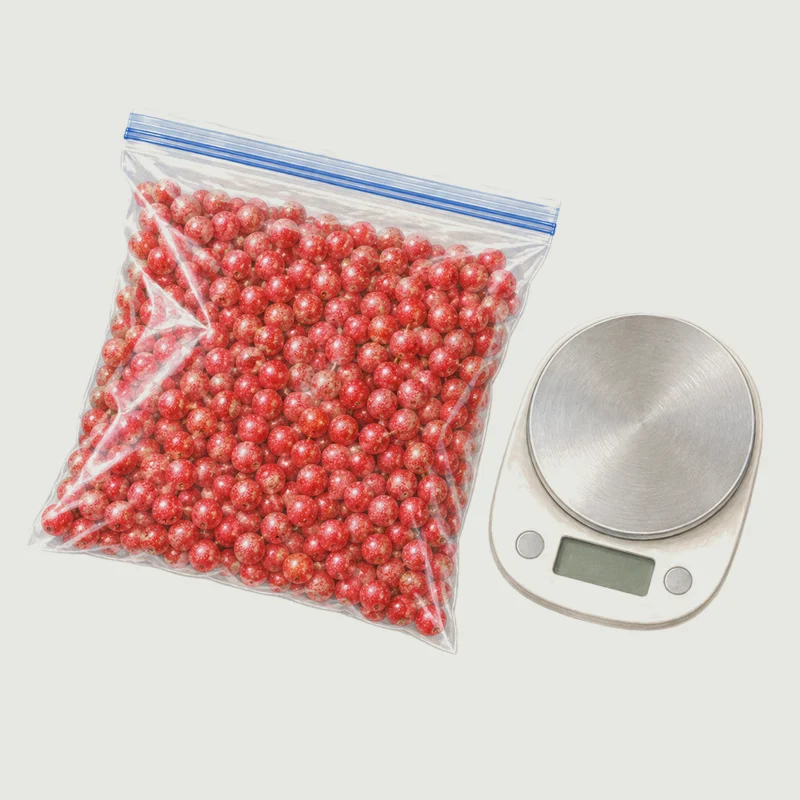
Let the fruit drain in the colander. Weigh out five pounds or less into each one-gallon freezer bag and zip it shut.
Leave room around each bag in the freezer so the fruit freezes faster.
-
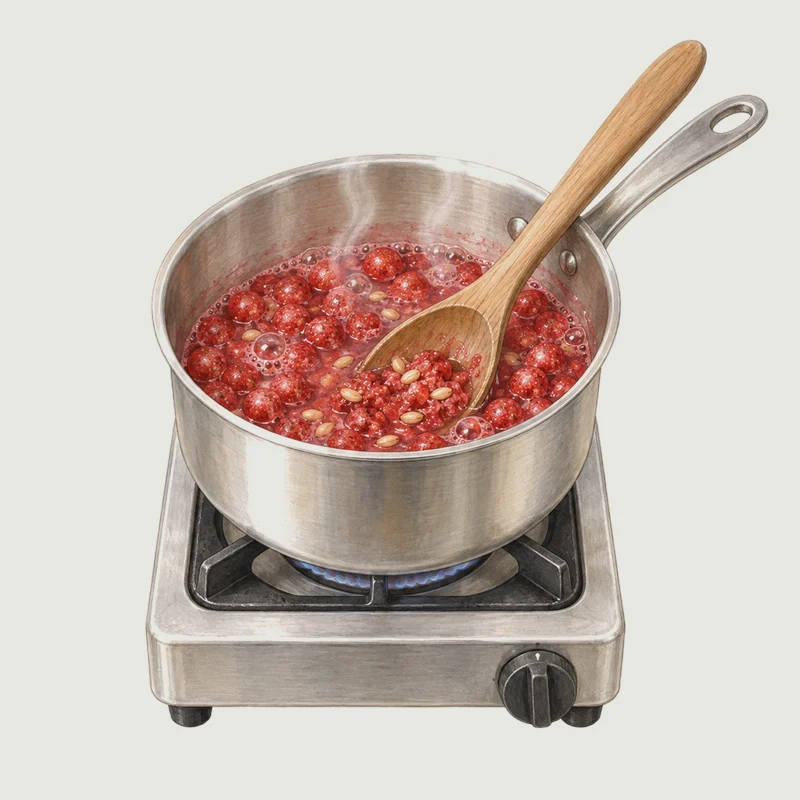
Cook
Put thawed or frozen fruit in a pan with just enough water to cover the bottom. If you want sugar, add it now. Simmer and stir until the red fruit comes away from the yellow seeds.
Better still, put the fruit and a little water in a pressure cooker and run it through a cycle.
-
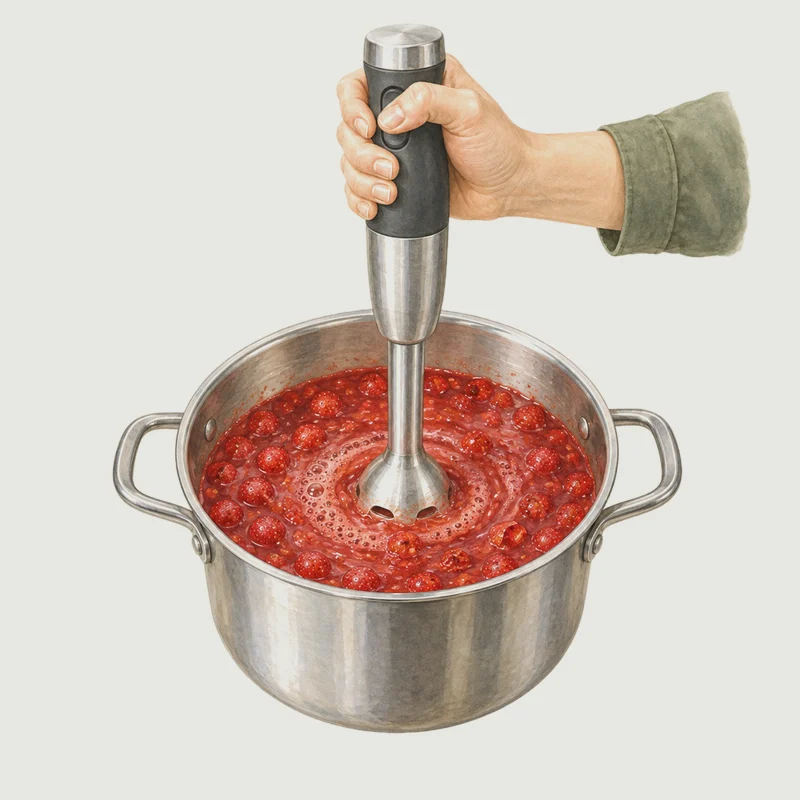
Blend, gently
Not necessary, but it helps. Pulse an immersion blender briefly on low in the soupy cooked fruit to separate the fruit from the seeds.
Blend too hard or too long and you'll break the seeds, releasing fibers and oily kernels into the puree.
-
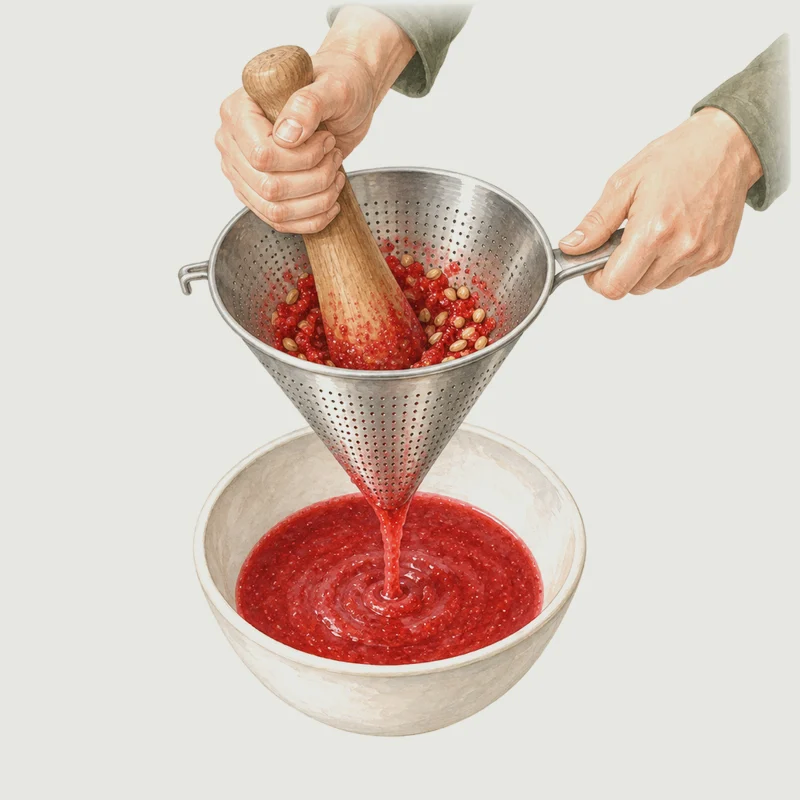
Strain
Push the cooked fruit through a colander with a spoon, or use a china cap, a chinois, or any strainer you'd use for tomatoes. What comes through is cooked, seedless puree, ready to become whatever you like.
For juice, squeeze the puree through a tight mesh bag or cheesecloth, or use a cider or wine press.
Don't see your question here? Send a note through the contact form or message us on Facebook.